
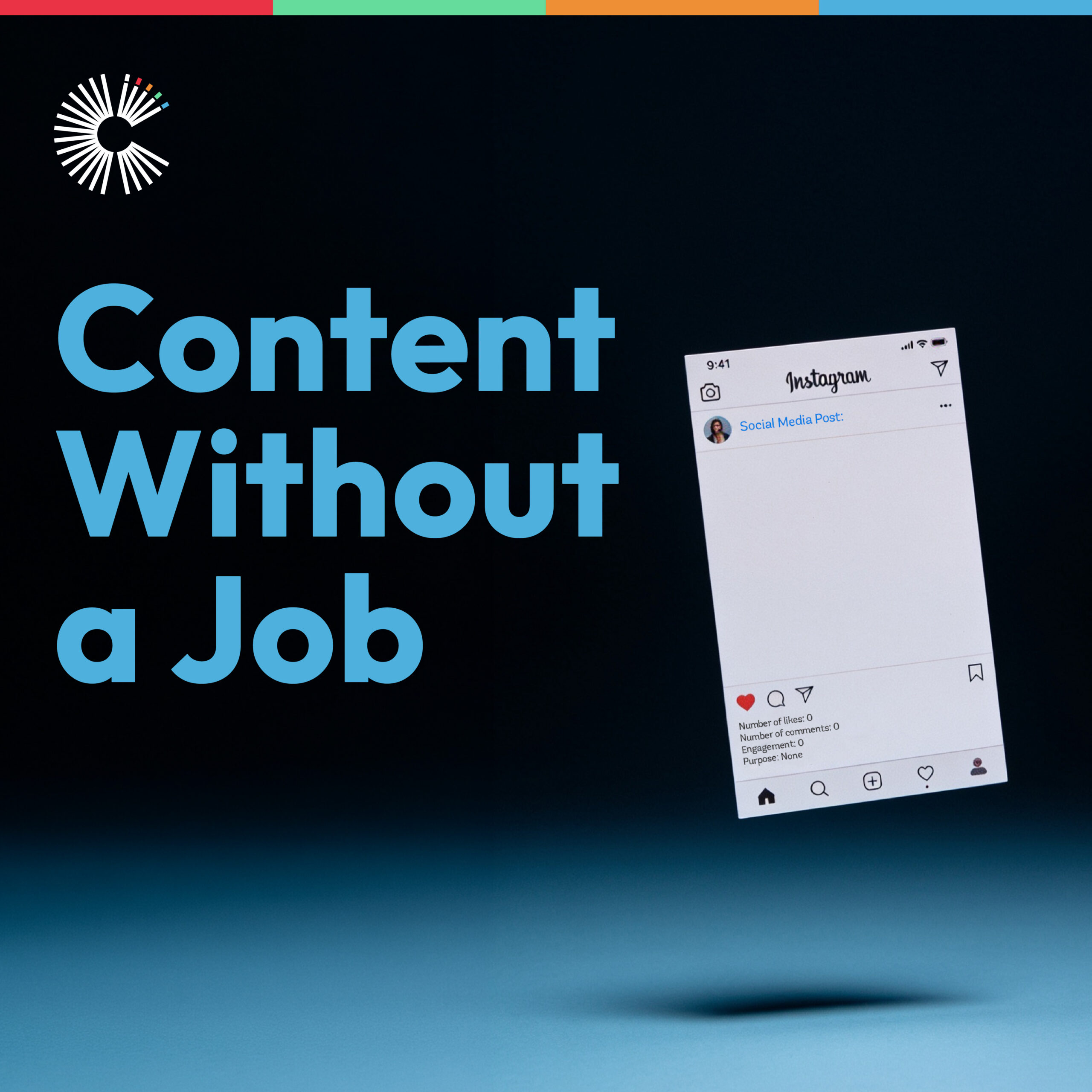
Most B2B content doesn’t fail because it’s poorly written. It fails because it wasn’t written for anyone in particular.
This is the uncomfortable truth behind most content marketing programs that produce a lot of material and generate very little pipeline: the content exists, but it doesn’t have a job. It lives on a website no one visits. It gets shared once on LinkedIn and forgotten. It answers questions no one was actually asking. It sounds impressive internally and lands flat externally.
The problem isn’t effort. Most marketing teams work hard. The problem is a missing connection between the content and the specific buyer it’s meant for, the specific stage that buyer is in, and the specific next step they should take after engaging with it.
Fix that connection, and content starts doing real work. Without it, you’re just publishing.
Content Without an Audience Is Just Publishing
The starting point for content that converts isn’t a topic. It’s a buyer.
Not a broad demographic. Not a market segment. A specific person at a specific stage of a specific decision, with a specific concern, your content could address.
For a mid-sized CPG brand trying to break into national retail, that buyer might be a VP of Sales who is skeptical of marketing investment because the last agency didn’t deliver. Their concern isn’t “How do I learn more about marketing?” Their concern is: “How do I justify this spend to leadership and make sure we don’t get burned again?”
Content that converts for that buyer looks nothing like general “content marketing best practices.” It sounds like:
- “How to evaluate a marketing agency if you’ve been burned before”
- “What to ask before you sign a marketing retainer”
- “The three things that separate marketing that generates sales from marketing that generates reports”
That content does actual work. It creates trust before the sales conversation happens. It pre-answers objections. It helps the buyer feel understood, which is one of the most powerful things any piece of content can do.
Generic content about “the importance of brand consistency” doesn’t do that for a skeptical VP of Sales. It might be true. It just isn’t relevant to them, right now, in a way that earns their attention.
The Four Questions Every Piece of B2B Content Should Answer
Before any piece of content gets written — blog post, social post, email, video, anything — it should be able to answer four questions:
- Who specifically is this for?
- What stage of their decision-making process are they in?
- What do they need to believe or understand after engaging with it?
- What should they do next?
If you can’t answer those questions clearly, the content isn’t ready to write yet. The topic might be good. The intent might be genuine. But without answers to those four questions, you’re making decisions about format, length, and tone based on instinct instead of strategy.
And instinct produces content that feels right to the people who made it and means very little to the buyers who encounter it.
The Conversion Path Problem
Even content that’s genuinely useful often fails to convert because there’s no clear path for the reader after they engage with it.
They read a strong blog post. They feel the brand is credible. They’re interested. And then there’s nothing to do. No relevant next step. No offer calibrated to their readiness. No way to raise their hand without committing to a sales call they’re not ready for.
This is a journey problem, not a content problem. The content might be excellent. But without a next step, it generates goodwill that evaporates.
Content at the top of the funnel — awareness stage — should have a next step appropriate for someone who just met you: another related piece of content, a diagnostic tool, a guide, or a no-pressure way to stay in touch.
Content at the middle of the funnel — consideration stage — should have a next step appropriate for someone who’s interested but not yet decided: a case study, a consultation, a workshop, or a more detailed framework.
Content at the bottom of the funnel — the decision stage — should include a next step appropriate for someone who’s ready to evaluate: a proposal, a demo, a specific offer, or a clear ask.
When all content points to the same CTA regardless of where the buyer is — “Contact us!” — you’re asking everyone to take the biggest possible commitment. Most won’t. And you’ll never know exactly why.
Quality Over Volume (And Why Volume Often Wins the Argument When It Shouldn’t)
A common response to content that isn’t working is to produce more of it. More blog posts. More social posts. More emails. More videos. The instinct is understandable: more attempts should mean more chances to connect.
But more often, the right answer is to do less, better.
One genuinely useful, well-targeted piece of content that speaks directly to a real buyer concern and offers a relevant next step will consistently outperform ten generic posts. It gets saved. It gets shared. It gets referenced in sales conversations. It gets linked from other places. It does actual work — often for months or years after it was published.
The discipline required is to ask, before creating anything: Who specifically is this for? What stage of their decision are they in? What do they need to believe or understand? What should they do next?
If you can’t answer those questions clearly, the content isn’t ready to write. No amount of clever writing or good design will compensate for a missing strategic direction.
SEO Content vs. Authority Content: Understanding Both Jobs
SEO-driven content and authority-building content have different jobs. Understanding the difference matters.
SEO content is built around how buyers search — the specific questions, phrases, and problems they type into Google at the beginning of their research. Done well, it creates a steady pipeline of inbound traffic from buyers who are already looking for something you can help with. It captures demand that already exists.
Authority content is built around a point of view — the unique thinking, frameworks, and perspectives that demonstrate why your team’s approach is different and worth trusting. Done well, it creates credibility and memorability with the buyers you’re already reaching. It builds demand by shaping how buyers think about a problem.
Both matter. Neither replaces the other.
The mistake is building only one. SEO content without authority leaves you ranking for searches but failing to stand out when buyers compare options. Authority content without SEO distribution relies entirely on your existing audience — fine if you have a large one, a serious bottleneck if you’re trying to grow.
For most growing B2B and CPG companies, the right ratio is weighted toward SEO early on (because you need to be found), with authority content layered in as the brand builds. Over time, the two compound: you get found because of SEO, and you get chosen because of authority.
The Role of the Sales Team in Content Strategy
One of the most underused inputs in content strategy is the sales team — specifically, the questions they hear, the objections they face, and the things buyers say when they’re trying to decide.
Those conversations contain the raw material for content that actually works. Every recurring objection is a content opportunity. Every question that comes up in every early sales call is a blog post that could pre-answer it and accelerate the buying process.
When marketing builds content from inside a conference room — based on what seems important to internal stakeholders — it often produces content that answers questions buyers aren’t asking. When marketing builds content from sales conversations — based on what buyers actually say when they’re trying to decide — it produces content that meets buyers exactly where they are.
The best content marketing programs have a feedback loop between sales and marketing. Not a complicated one. Just a regular habit of asking: What are you hearing? What questions keep coming up? What objections are we losing deals over? What do buyers say they need to see before they’ll commit?
That input shapes a content strategy that generates leads sales can actually use.
What to Do If Your Content Isn’t Working
If your content program is producing posts but not a pipeline, the answer isn’t to stop. It’s to audit.
Look at your top-performing content: what do those pieces have in common? Who were they written for? What stage were those buyers in? What did those pieces do that others didn’t?
Then look at the content that gets no traction: what’s missing? Is the audience too broad? Is the topic too generic? Is there no clear next step? Is the distribution too limited?
The answers to those questions are almost always more actionable than any content hack, platform change, or posting frequency adjustment. The strategy drives the results. Everything else is execution.
Content that converts is specific. It’s built for a real buyer in a real moment with a real concern. It has a clear next step. And it earns trust before it asks for anything.
That’s not a complicated framework. But it requires discipline to execute — especially when the instinct is to cover every topic for everyone all the time.
CVAC helps growing companies build content strategies that connect buyer concerns to brand credibility to business outcomes. Not just content calendars. Strategies that have a job to do.
Ready to build B2B content that actually works?